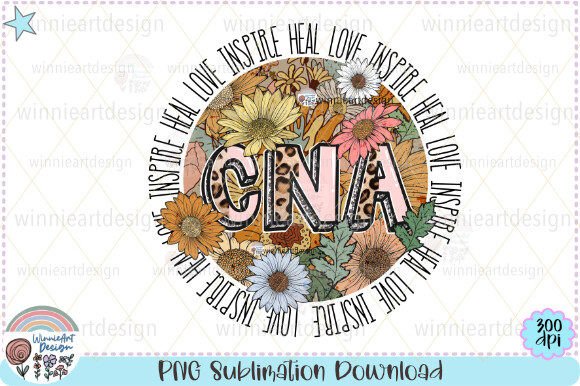
Nurse Wildflowers Love Inspire Heal, CNA: A Hands-On Embroidery Designer’s Review
Grabbing a digital graphic labeled as a sublimation file isn’t always my first move when scouting for an embroidery design. But when I saw Nurse Wildflowers Love Inspire Heal, CNA, I immediately pictured it stitched onto a sturdy natural canvas tote — something a nurse could carry every shift with quiet pride. The gentle wildflowers and the hand-lettered feel of the words “Love Inspire Heal” hit that sweet spot between heartfelt and professional. So I decided to see how this graphic would actually behave if I treated it as the blueprint for a real embroidery project.
What arrived was a single high-resolution PNG file, pre-sized at 4000 x 4000 pixels at 300 dpi, tucked inside a zip folder. No vector format, no embroidery file — just a clean, crisp raster image with plenty of detail. For embroidery, that means you’re going to need digitizing software and a little patience. But the resolution is generous enough to hold fine petal edges and delicate letterforms without breaking apart, even when you zoom in for stitch placement.
The Mood It Creates and Where I’d Stitch It
The personality of Nurse Wildflowers Love Inspire Heal, CNA is instantly warm. The wildflowers feel organic, almost watercolor-inspired, while the text “Nurse” and “CNA” anchors the whole piece in caregiving. It doesn’t shout; it whispers encouragement. That makes it ideal for projects where emotional value matters more than flash — think thank-you gifts, nurse appreciation week presents, or boutique handmade items that celebrate healthcare workers.
My mind goes straight to a few specific products: a canvas tote bag with a linen-look stabilizer underneath, a soft brushed cotton pillow cover for a nurse’s break room, a zipper pouch filled with tiny self-care goodies, or a half-zip sweatshirt where the design sits quietly on the left chest. You could also place it on a baby onesie for a nursing student who just became a mom — the wildflowers would soften the typography perfectly. The layout is centered and rounded, so it wants a flat, stable stitching area. Curved caps or baseball hats might fight the composition, but a patch application? That’s another story entirely.
A Real Test on a Canvas Tote
To really judge this graphic, I ran a practical test. A client had asked me to create a personalized tote for her sister, a brand-new CNA. She wanted something pretty but sturdy, something that said, “I’m proud of you,” without being too sugary. I pulled the Nurse Wildflowers Love Inspire Heal, CNA PNG into my digitizing software and got to work.
The first step was mapping out stitch types. The wildflowers asked for a mix of satin outlines and light fill stitches to keep them airy. I used a low-density tatami fill for the larger petals and a fine satin column for the slender leaves. The lettering, especially “Love Inspire Heal,” needed to read clearly at about 2.5 inches wide — I tested it with a soft charcoal thread that wouldn’t compete with the flowers. For the small “CNA” text, I bumped the size just a touch and ran a few test stitches on scrap cotton. The results were worth it: the design stitched out with a lovely organic flow, and even the tiny flower centers held up with a small column stitch adjustment. The tote, once pressed and photographed, earned genuine squeals from my client — exactly the reaction you want from a handmade product.
What You Need to Know Before You Digitize and Stitch
Let’s be clear: this is not an embroidery file. You’re getting a high-quality PNG graphic that you’ll need to digitize yourself, either manually or with guided auto-digitizing. That means you control stitch direction, density, pull compensation, and color stops. It’s an extra step, but it also gives you total creative freedom.
Here are the practical nudges I’d give any embroidery designer thinking of using Nurse Wildflowers Love Inspire Heal, CNA for a project:
- Test your digitized version on scrap fabric first — the same type and color you’ll use for the final product.
- Pay attention to thread color contrast. The PNG has soft, blended hues; on dark fabric, those delicate pinks and lavenders can disappear without a light underlay or an added outline.
- Check the “CNA” lettering size. If your hoop forces you to shrink the design below about 3 inches wide, that tiny text may turn into a blob. Adjust the digitized file to keep it at least 8-10 mm tall in satin.
- Use proper stabilizer. For a tote bag, a medium-weight cutaway or tear-away works fine. On stretchy knits or thin t-shirts, add a no-show mesh stabilizer and baste the fabric firmly in the hoop.
- Watch out for dense stitch areas. If you digitize the flower centers too heavily, you risk puckering or rough hand feel. Lighten the density and let the fabric breathe.
When Fabric and Hoop Size Call for Caution
This design has a balanced, rounded silhouette that generally plays nice with standard hoops like 130mm x 180mm or even 100mm x 100mm if you downsize carefully. But there are moments when you should pause.
For tiny hoops (4x4 inches and smaller), the details could suffer. You might lose the wildflower’s airy charm and the lettering could become unreadable. If you only have small hoops, consider splitting the design into two pieces or using the graphic as a single decorative patch instead of a direct stitch. On highly textured fabrics like terry cloth or fleece, the fine petals will blur — a smooth woven substrate always looks crisper.
Dark garments demand a little extra love. I’d run a black-and-white mockup first (many digitizing programs let you preview that) to see if the composition holds its shape. A subtle white outline around the flowers can make the whole piece pop on navy scrubs or a charcoal tote. And if you’re stitching on a thin jersey tee, don’t skip the extra topping layer — the wildflower fill stitches can sink without it.
Making It Work for Commercial Projects and Small Shops
If you sell finished embroidery goods or run a small business, Nurse Wildflowers Love Inspire Heal, CNA has real potential. It’s the kind of design that catches a buyer’s eye because it feels personal, not mass-produced. I can see it doing well as part of a nurse-themed collection: a matching tote and mug rug, a trio of embroidered notebooks, or a set of kitchen towels for a CNA graduation gift.
It’s also listed under T-Shirt Designs as a graphic, which means the original file is absolutely ready for sublimation or printable mockup use. For an embroidery business, that’s a nice bonus — you can use the same PNG to create lifelike digital previews of your stitched products. Just be mindful of licensing. The product description doesn’t spell out commercial embroidery rights, so before you digitize this artwork and sell the finished pieces (or, heaven forbid, resell the digitized embroidery file), reach out and clarify terms. A quick conversation can save a lot of stress down the road.
Small Technical Notes That Matter
Because this is a 300 dpi PNG and not a vector file, you won’t be able to scale it infinitely without some quality loss. However, at 4000 pixels square, it gives you a huge canvas to work with. I found I could comfortably digitize the design at up to 8 inches without any pixelation showing through in the stitch planning. The floral shapes are clear enough to trace semi-automatically, and the text is crisp — no fuzzy edges that force you to guess.
Thread color mapping was a personal joy. I pulled a soft sage green for the stems, a dusty lilac and warm peach for the blossoms, and a creamy white for the occasional tiny accent. For the lettering, I stayed with a deep espresso brown on natural canvas and a soft dove gray on a cream-colored tote. The key is to keep the palette harmonious so the “Love Inspire Heal” message remains the emotional center.
Who Should Grab This Graphic for Embroidery
I’d hand this to any stitcher who likes to build their own embroidery files and has a soft spot for caregiver-themed gifts. It’s a treat for Etsy sellers, craft fair vendors, and handmade shop owners who want to offer something meaningful without spending hours creating original artwork from scratch. It’s also a great pick for hobbyists making a one-of-a-kind gift for a nurse or CNA in their lives — the wildflower feel is universal enough to suit all ages and styles.
If you’re brand new to digitizing, this file is a forgiving place to practice. The shapes are well-defined and the composition isn’t overly complex. Just run test after test, and you’ll get a feel for how the stitches build. And if you’re a seasoned embroidery designer, you’ll appreciate the time saved on layout and illustration — you can pour your energy into perfecting stitch angles and texture instead.
At the end of my test, the tote I made felt boutique-worthy. The Nurse Wildflowers Love Inspire Heal, CNA graphic translated into thread with all its tenderness intact. It gave a handmade product the emotional weight that customers remember. That’s the marker of a design asset worth using — not because it’s flashy, but because it genuinely fits the stories we stitch.